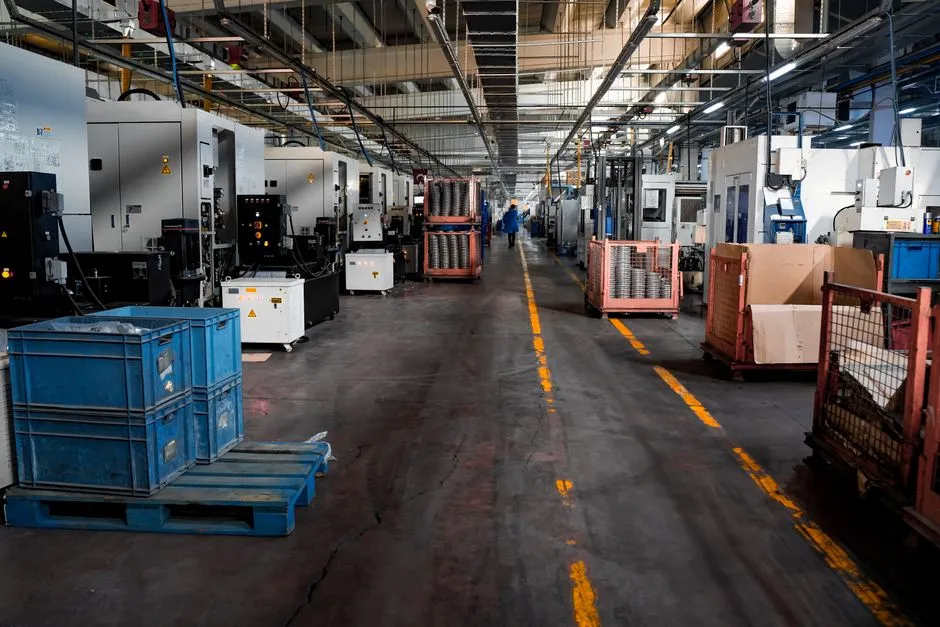
Quick answer: Managing production downtime tracking effectively, alongside cutting down on scrap, is key to manufacturing efficiency and making more money. A Factory Manufacturing Execution System (MES) gives you the tools to collect and analyze data right now. That means you get insights you can actually use to minimize idle time and wasted material. This seriously boosts how well you run things and improves your overall equipment effectiveness (OEE).
Key Takeaways
- Factory MES puts all your data in one spot, so you can track and analyze downtime precisely.
- Seeing machine status and performance in real-time? That’s essential for fixing problems fast.
- Integrating MES lets you spot and cut down on scrap right away. That means you’re using materials better.
- MES helps you figure out why downtime and scrap happen, pushing you toward constant improvements.
- Better OEE? That’s what you get when you use MES well. It means big cost savings and more output for 2026 and beyond.
- MES gives you data, so you can make smarter decisions. You’ll stop just reacting to problems and start proactively making things better.
Effectively managing production downtime tracking is absolutely vital for running a great manufacturing operation. If you don’t keep tabs on these stops and fix them, you’re looking at big financial losses, less product, and a weaker competitive position. And nobody wants that.
Implementing a good Factory Manufacturing Execution System (MES) isn’t just about tracking; it helps you analyze and seriously cut down on non-productive time. It gives you a complete picture of your whole production floor. So, managers get the data they need to really dial in their processes.
What is Production Downtime and Why Track It?
Production downtime is simply when your manufacturing line or machine isn’t making anything. Think equipment breakdowns, maintenance work, running out of materials, or other operational hiccups. That means lost production capacity, pure and simple. And it hits your revenue, big time.
Tracking downtime is vital. It shows you where things are inefficient, where your bottlenecks are, and exactly how much those operational stops are costing you. Without good tracking, you’re flying blind. You can’t figure out the real reasons for lost productivity.
Understand how often downtime happens, how long it lasts, and what’s really causing it. Then you can make targeted fixes. This data-first approach means your production schedules are more reliable. Plus, your equipment lasts longer, and your plant makes more profit. It’s a win-win-win.
How Does Factory MES Facilitate Managing Production Downtime Tracking?
A Factory MES is like the brain of your manufacturing operations. It pulls in and crunches real-time data from all your shop floor equipment and processes. And that’s absolutely key for managing production downtime tracking with real precision.
The system automatically records what each machine is doing: running, sitting idle, or stopped. It knows the difference. This automatic data collection means no more manual mistakes. You get an unbiased, objective record of every single downtime event, right as it happens on the floor.
MES platforms usually come with built-in analytics. These tools sort downtime by why it happened, how long it lasted, and how often. So you can instantly see performance metrics. It also flags specific spots that need your focus – maybe a certain machine, or a step in the process.
You can set up your MES to ask operators why a machine stopped unexpectedly. This adds valuable human insight to the data. And this mix of automatic and manual data gives you a really full picture. That’s what you need for root cause analysis and ongoing improvements.

What’s more, an MES can shoot out real-time alerts the second a machine goes down. Everyone who needs to know gets notified right away. This quick communication cuts down response times. It means downtime events are shorter, and you recover much faster.
The system keeps historical data, too. That lets you spot trends and do predictive maintenance. When you look at past downtime, you can actually predict future failures. So you schedule preventive maintenance, turning unexpected stops into planned, controlled breaks.
What Role Does MES Play in Scrap Factor Reductions?
But MES isn’t just about downtime. It’s just as important for tackling the expensive problem of scrap and rework. Cut down on scrap, and you directly save money on materials. Plus, your product quality gets better.
MES gives you detailed tracking of how you use materials and what you produce – even the rejected stuff. And if it links up with your quality control systems, it can record exactly why scrap happens: maybe bad materials, process gone wrong, or operator mistakes.
Monitoring process parameters in real-time – things like temperature, pressure, and speed – helps you spot conditions that cause defects. If those parameters go out of whack, the MES can send an alert. That means you can fix things before you churn out a ton of scrap.
MES has traceability features, and they’re essential for finding the source of quality problems. You can trace a bad product right back to its batch, the raw materials used, the equipment, even the operator. So you pinpoint where the problem started and stop it from happening again.
MES data analytics can actually show you patterns in scrap. Maybe certain shifts, machines, or batches of material consistently produce more defects, for example. That kind of insight lets your quality teams make targeted improvements and really tune up your manufacturing processes.
What are the Benefits of Integrating MES for Downtime and Scrap Management?
Integrating an MES for comprehensive downtime and scrap management brings a whole host of benefits that touch every part of your manufacturing business.
Improved Overall Equipment Effectiveness (OEE)
OEE combines availability, performance, and quality – it’s a vital metric. When you cut downtime and scrap, MES directly bumps up your OEE. So your equipment runs more, it produces at its best speed, and you get fewer defects. That all adds up to much higher productivity.
Significant Cost Savings by 2027
Less downtime means your pricey machines and staff aren’t sitting idle. That immediately cuts operational costs. Lower scrap rates? That means less wasted material, less money spent on rework, and cheaper disposal. Win, win, win. For big operations, these savings could easily hit millions every year, starting by 2027.
Enhanced Decision-Making Capabilities
MES gives managers accurate, real-time data. This replaces guesswork with hard facts, helping them make better choices. So they make smarter decisions about everything: maintenance schedules, production planning, tweaking processes, and even how to spend on new equipment.
Increased Production Throughput and Capacity
When you keep disruptions and waste low, your production lines can run closer to their full potential. And that boost in throughput? It means you can make more products in the same amount of time. You’ll satisfy higher demand and react quicker to market shifts.

Better Compliance and Quality Assurance
An MES keeps detailed audit trails for every single production run. That includes material batches, process settings, and all your quality checks. This means you’re compliant with regulations. And you get verifiable proof of product quality, which is absolutely vital in regulated industries, isn’t it?
Predictive Maintenance and Proactive Problem Solving
MES uses advanced analytics to spot early signs of equipment breaking down or processes going off track. So you can step in proactively – maybe with scheduled maintenance or by tweaking a process. That stops costly unplanned downtime and seriously cuts the chance of scrap.
Implementing Factory MES for Managing Production Downtime Tracking
Successful implementation of a Factory MES for managing production downtime tracking? It takes a smart approach and solid planning.
First, get your objectives clear. What downtime events or scrap types do you really want to cut down on? Set measurable Key Performance Indicators (KPIs) – these will guide your implementation and help you actually measure your success.
Often, a phased approach works best. Start with a pilot project on just one critical production line. That lets your team learn, tweak processes, and show off early successes before you roll it out wider across the whole plant.
But data integration? That’s everything. Your MES has to connect smoothly with your existing ERP systems, PLCs, and all other shop floor equipment. You need one big, unified data system.
Operator training is also super important. Your people need to know how to use the MES, how to enter data correctly, and how to get the most out of its features. Because if users don’t adopt it, you won’t get the full benefits.

And don’t forget ongoing support and continuous improvement. They’re essential. Look at the MES data regularly. Find new ways to optimize, and tweak the system as your production needs change. The MES isn’t a one-and-done solution; it’s a tool to keep making your operations better, always.
Future Trends in MES for Production Optimization by 2028
Factory MES capabilities are always getting better, and we’ll see huge leaps in managing production downtime tracking and waste reduction by 2028. Artificial intelligence (AI) and machine learning (ML) will play an even bigger part.
AI algorithms will get much smarter at predicting equipment failures. They’ll pick up on tiny data patterns, going beyond just predicting maintenance to prescribing it. So the MES won’t just say ‘this machine might fail.’ It’ll tell you exactly what to do and when to do it.
Integrating with edge computing means faster, more localized data processing, right there on the shop floor. That cuts down lag time and lets you make almost instant decisions, without always relying on cloud systems. It makes you way more responsive when critical stuff happens.
Digital twin technology will let you build virtual copies of your production lines. So you can simulate changes, test maintenance plans, and spot potential downtime scenarios in a totally safe virtual world, all before you actually do anything on the real floor.

And Augmented Reality (AR) tools, hooked into MES, will give operators real-time instructions and diagnostic overlays. This helps with maintenance, troubleshooting, and cuts down on human error during complicated procedures. That alone could seriously slash maintenance downtime.
The future of MES? It’s heading toward highly autonomous manufacturing. Systems will proactively optimize production, predict and stop disruptions, and constantly fine-tune processes. Think unmatched efficiency and barely any waste.
Frequently Asked Questions
What is a Factory MES?
A Factory MES (Manufacturing Execution System) is a software system that monitors, manages, and syncs up all your real-time production processes on the factory floor. It basically bridges the gap between your big-picture enterprise planning and the nitty-gritty operational control.
How does MES help improve OEE?
MES improves OEE by giving you real-time data on machine availability (so you cut downtime), performance (how your actual cycle times compare to ideal ones), and quality (by tracking scrap and rework). This lets you make targeted improvements across the board.
Can MES prevent all downtime?
No, MES can’t prevent all downtime. But it seriously cuts down on unplanned stops. How? By letting you do proactive maintenance, giving early warnings, and making recovery quicker when things do go wrong.
What is the typical ROI for an MES implementation?
The Return on Investment (ROI) for an MES can really vary, but you often see it within 6 to 18 months. This comes from cutting downtime, scrap, and labor costs, plus boosting throughput and quality. Double-digit percentage gains are common.
Is MES only for large manufacturers?
Nope. MES solutions are scalable, and small and medium-sized manufacturers can get their hands on them more and more. Lots of modular MES options mean you can just implement the specific features that tackle your most urgent problems first.
What data does MES collect for downtime tracking?
MES pulls in data like how long a machine runs, sits idle, or is stopped. It also gets reasons for stops (broken down, changeover, out of material, etc.), production counts, cycle times, and other operational events, all in real-time.