Quick answer: Warehouse management systems (WMS) are pivotal for enhancing operational efficiency in modern logistics, particularly by streamlining complex processes like cross-docking and advanced pallet putaway logic. These sophisticated software solutions automate, integrate, and optimize warehouse workflows, leading to significant reductions in handling costs, improved inventory accuracy, and faster order fulfillment by 2026 and beyond.
Key Takeaways
- Warehouse management systems (WMS) are essential for modernizing warehouse operations.
- Cross-docking significantly reduces storage time and handling costs by moving goods directly from inbound to outbound.
- Effective pallet putaway logic maximizes space utilization and optimizes retrieval times.
- WMS automates decision-making for both cross-docking and putaway, reducing human error.
- Implementing a WMS can yield substantial improvements in efficiency, accuracy, and overall supply chain performance.
- Strategic integration of WMS capabilities is crucial for achieving competitive advantages in logistics.
Why Are Warehouse Management Systems Crucial for Modern Logistics?
Warehouse management systems (WMS) are really the digital brain of today’s warehouses. They perfectly coordinate how goods move and get stored. These systems control and manage everything, from when inventory first comes in until it ships out. So, you get efficiency and accuracy all the way through. A WMS integrates all your operations, changing your warehouse from just a storage spot into a bustling, responsive hub.
But listen, solid warehouse management systems are more important than ever now. Customers expect faster deliveries. Your inventory’s probably getting more complex. And everyone’s pushing to cut costs. A WMS tackles these head-on. It gives you real-time views of inventory, makes the best use of your space, and automates all those tough, manual jobs. That’s how it future-proofs your supply chain for 2026 and well beyond.
And the system’s really good at helping you make better decisions with all its data. Managers can spot bottlenecks fast, forecast demand much more accurately, and put resources where they’ll do the most good. What you get is a leaner, quicker, and ultimately more profitable warehouse.

What is Cross-Docking and How Does a WMS Optimize It?
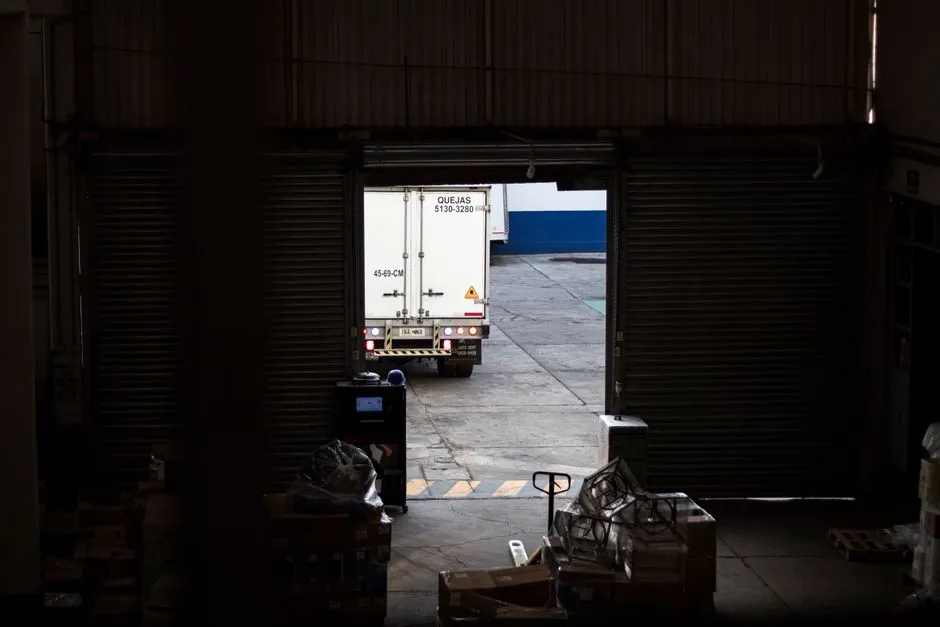
Cross-docking is a pretty clever logistics strategy. Basically, incoming stuff – materials or products – gets moved straight from an inbound truck right onto an outbound one. You barely store it, if at all. This cuts out the usual warehousing step completely, sending items across the dock directly to their next stop. The big idea here is to slash handling, storage costs, and delivery times, making your supply chain zip along much faster.
You’ll find a few types of cross-docking. There’s ‘pre-allocated,’ where items are already assigned to outbound orders even before they show up. Then you’ve got ‘consolidation,’ which combines several small shipments into one bigger one. And ‘deconsolidation’ does the opposite, breaking down big shipments into smaller ones. Each type fits different logistics needs, but they all push for speedy movement.
A really smart warehouse management system is absolutely essential for making cross-docking work well. The WMS gives you all the brains you need to perfectly coordinate inbound and outbound logistics. It grabs advanced shipping notices (ASNs) from your suppliers. So, it knows what’s coming, letting it anticipate arrivals and pre-plan exactly where those goods should go for specific outbound orders or routes. That foresight is key to keeping dwell time super short.
Once stuff arrives, the WMS tells your handlers exactly where to move it – usually straight to an outbound truck that’s waiting, or to a staging area for quick transfer. It handles the real-time matching of incoming items with what’s needed for outgoing shipments. That way, everything’s accurate, and you don’t get misroutes. Honestly, trying to do cross-docking manually without a WMS? That’d be a total mess, chaotic and full of errors, pretty much wiping out all the good it could do.
What Are the Key Benefits of WMS-Enabled Cross-Docking?
Using cross-docking, especially with good warehouse management systems backing you up, brings some serious perks. For starters, you slash inventory holding costs. When you barely store items, businesses don’t need huge warehouse spaces. And they cut way down on expenses like inventory insurance, security, or costs from potential damage and stuff becoming obsolete.
Second, transit times get way shorter. Products zip through the supply chain, which means faster deliveries for your customers or retail stores. That boost in speed can really set you apart from competitors, especially if you’re dealing with fresh goods or anything time-sensitive. It’ll definitely make customers happier by 2027.
Third, you’ll cut down on handling costs. Fewer hands on the product means less labor for putting things away or picking them up. The WMS figures out the best routes and assigns tasks super efficiently, making the whole thing run even smoother. Plus, this direct transfer method helps prevent product damage because you’re just not moving stuff around as much.
Finally, a WMS gives you incredible insight into your cross-docking. Managers can track goods status in real-time, see potential delays coming, and react fast to anything unexpected. This immediate data helps them make smarter decisions and keeps everything flowing smoothly. You just get better operational control.
How Does Pallet Putaway Logic Work in Warehouse Management Systems?
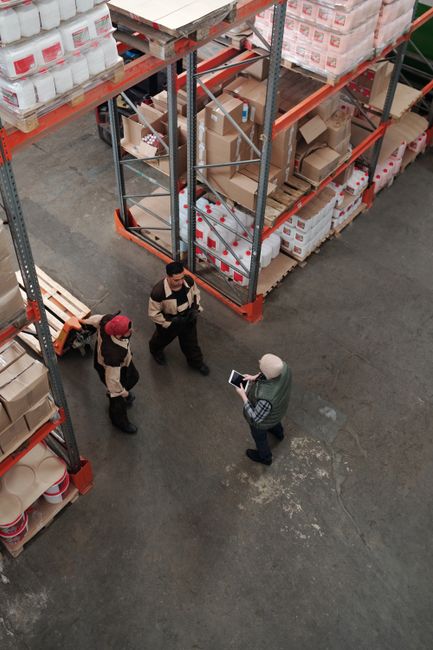
Pallet putaway logic is basically the set of rules and algorithms a warehouse management system uses to figure out the absolute best spot to store incoming pallets or inventory. The main goal? To use your warehouse space as fully as possible, cut down on travel time for both putting stuff away and getting it out, and just make the whole operation run better. It’s really central to smart warehouse design.
You’ve got different putaway strategies, each one fitting specific warehouse layouts and product types. ‘Fixed location’ putaway, for example, gives every SKU a permanent spot; that’s great for slow-movers or really specialized items. ‘Random putaway,’ on the other hand, just puts items in the closest open slot, which is perfect for high-volume, fast-moving stuff because it really maximizes your space.
Even smarter logic includes ‘zone-based’ putaway, where you set aside different areas for specific product types or how fast they move. And ‘interleaving’ combines putting stuff away with picking it, cutting down on empty trips. A WMS can dynamically pick the best strategy, looking at real-time data, product dimensions, weight, how fast it sells, and even things like if it needs refrigeration.
The WMS considers tons of factors when it picks a putaway spot: how much space is open right now, product details (size, weight, shelf life), any special handling (is it fragile? hazardous?), what demand looks like, and what’s already nearby. It’s all about cutting down congestion, making picking paths easier, and keeping your inventory honest.
What Advanced Pallet Putaway Strategies Do Warehouse Management Systems Support?
Look, modern warehouse management systems don’t just stick with basic fixed or random assignments. They use really clever algorithms to boost how efficient putaway is. One strategy, ‘family grouping,’ puts similar products – or ones customers often buy together – right next to each other. That makes picking for combined orders much faster, seriously cutting down on how far pickers have to walk.
Another advanced method is ‘velocity-based’ putaway. High-velocity items (fast-movers) go into easily accessible, forward pick areas, while low-velocity items (slow-movers) get stored in less accessible, higher-density spots. The WMS constantly checks sales data to re-slot products as their velocity changes, ensuring they’re always optimally placed.
‘Cubic utilization’ putaway is all about getting the most out of your warehouse’s vertical and horizontal space. The WMS checks out the dimensions of incoming pallets and the available slots to fit everything perfectly, so you’re not wasting any air. This is super important for warehouses that don’t have much floor space but have really high ceilings.
And WMS can even do ‘seasonal re-slotting.’ That means it temporarily moves products around based on when you expect demand to spike for certain seasons or promotions. This smart, proactive move makes sure your most popular items are always in the best picking spots, getting your warehouse ready for big customer order surges well into 2028.
How Do Warehouse Management Systems Integrate Cross-Docking and Putaway?
The real magic of warehouse management systems? It’s how they can bring together and fine-tune warehouse jobs that used to be totally separate, like cross-docking and pallet putaway. A WMS doesn’t see these as individual tasks. Nope, it views them as linked parts of one big, smart inventory flow plan. This integrated approach means decisions you make in one area always help out the others.
Say an inbound shipment arrives. The WMS digs into its contents. If some items are clearly meant for immediate outbound shipping – basically, cross-dock candidates – the system tags them for direct transfer. At the same time, any other stuff on that shipment needing storage gets sent straight to its perfect putaway spot, all figured out by the WMS’s clever logic.
This quick, smart decision-making totally cuts out unnecessary handling. Think about it: without a WMS, all incoming goods might first go to a putaway area, only to be picked again really soon for cross-docking. But the integrated system zaps that extra step, saving you time, labor, and cutting down on errors. It’s about getting it right the first time.
The WMS basically works like your warehouse’s central nervous system. It pulls in data from all over – ASNs, sales orders, inventory counts, even real-time occupancy sensors – so it can make smart, on-the-spot decisions. This deep data integration is what makes those complex logistics plans run like clockwork, giving you huge operational boosts.

What Metrics Indicate Optimized Cross-Docking and Pallet Putaway?
You’ve got to measure how well your WMS-powered cross-docking and putaway are doing; it’s essential for getting better all the time. Key performance indicators (KPIs) show you how healthy your operations are. For cross-docking, a big one is ‘dock-to-stock’ or ‘dock-to-ship’ cycle time. That’s how long it takes from when you get something until it’s transferred or shipped out. Shorter times mean you’re running much more efficiently.
Another key metric is your ‘cross-docking percentage.’ This tells you what proportion of incoming goods totally skip traditional storage. A higher percentage usually means you’ve pulled off the implementation well and you’re saving more money. Order accuracy for cross-docked items, based on error rates, is also super important to make sure everything’s shipped correctly.
For pallet putaway, the ‘storage utilization rate’ is a huge KPI. It shows you just how efficiently you’re using your warehouse space. A higher percentage, as long as you’re not making things hard to get to, means your putaway logic is working great. ‘Putaway cycle time’ and ‘putaway accuracy’ keep tabs on how fast and correctly items get placed in their assigned spots.
And don’t forget ‘travel time per putaway’ and ‘travel time per pick’ – those are crucial too. Smart putaway logic should directly cut down on how far people have to travel for both jobs, simply because items are stored in easy-to-get-to or logically grouped places. If you keep an eye on these KPIs regularly, you can fine-tune your WMS settings for peak performance and best cost efficiency. We’re talking superior results by 2029.
What Are the Future Trends for Warehouse Management Systems?
Warehouse management systems are always changing, always getting better. That’s because technology keeps advancing and market demands shift. As we look to 2026 and beyond, a few big trends are definitely going to shake up how WMS works and contributes to an amazing supply chain. These new ideas promise even more automation and smarter systems.
One huge trend is how much more Artificial Intelligence (AI) and Machine Learning (ML) will get baked into WMS. These technologies will let WMS do predictive analytics with incredible accuracy – thinking about forecasting demand, making the best use of your workforce, and quickly tweaking putaway and picking strategies as patterns change. For instance, ML algorithms will learn the best putaway spots just by looking at past data and what’s happening right now.
You’ll also see way more IoT (Internet of Things) devices popping up in warehouses. Sensors on your equipment, pallets, even on individual items will constantly send real-time data right back to the WMS. This means you’ll have amazing insight into where everything is, what the environment’s like, and how your equipment’s doing. So, you can do proactive maintenance and manage inventory with incredible precision.
And robotics and automation? They’ll blend in even more smoothly. WMS will increasingly manage autonomous mobile robots (AMRs) for things like putting stuff away, picking, and moving goods internally. That’ll cut down manual labor even further and speed things up. When smart software and clever hardware come together like this, you’re going to hit whole new levels of efficiency and resilience in your warehouse.

Frequently Asked Questions
What is the main purpose of a warehouse management system?
The main purpose of a warehouse management system is to control and manage the day-to-day operations of a warehouse, from receiving and putaway to order fulfillment and shipping. It optimizes efficiency, accuracy, and space utilization, streamlining all inventory movements.
Can a WMS improve inventory accuracy?
Yes, a warehouse management system significantly improves inventory accuracy by providing real-time tracking of all goods, automating data capture through barcoding or RFID, and reducing manual entry errors. This leads to more reliable stock counts and better decision-making.
Is cross-docking suitable for all types of products?
Cross-docking is most suitable for high-demand, perishable, or time-sensitive products with consistent volume. It may not be ideal for all product types, especially those with unpredictable demand or requiring extensive value-added services in the warehouse.
How does a WMS optimize labor efficiency?
A WMS optimizes labor efficiency by intelligently assigning tasks, directing workers along the most efficient routes, and balancing workloads. It reduces idle time, eliminates redundant steps, and provides performance tracking for continuous improvement.
What is the difference between WMS and ERP?
WMS focuses specifically on optimizing warehouse operations and inventory management, while an ERP (Enterprise Resource Planning) system is a broader suite of integrated applications managing core business processes like finance, HR, and sales. They often integrate to share data.