Quick answer: Getting in-store pick-pack-and-ship fulfillment right is a game-changer for retailers in 2026. It means stores can actually use their physical inventory for online orders, and that’s huge. But you need a good Retail Store Floor Warehouse Management System (WMS). It’ll smooth out every step, from when an order comes in to when it ships out, making things faster, more accurate, and customers way happier.
Key Takeaways
- Retail stores are becoming super important for filling online orders, practically turning into mini distribution centers.
- You really need a special Retail Store Floor WMS to handle the whole pick-pack-and-ship process efficiently right there in the store.
- Using WMS tech makes orders much more accurate, speeds up processing, and helps you use your staff better.
- Challenges like knowing what inventory you actually have, tight spaces, and training staff? You can beat those with a smart, integrated WMS plan.
- Expect more automation, AI-driven smarts, and seamless connections with bigger supply chain systems in store fulfillment down the road.
Why is Efficient In-Store Pick-Pack-and-Ship Fulfillment So Important in 2026?
Look, getting in-store pick-pack-and-ship fulfillment right isn’t just a nice-to-have anymore. It’s central to how retailers operate. By 2026, customers simply expect quicker delivery and a smooth experience whether they’re shopping online or in person. That blurs the lines, doesn’t it? Stores, which used to just be places to sell stuff, are now key spots in the supply chain – often closer to the customer than traditional warehouses ever were.
Using store inventory for online orders cuts down on shipping costs and gets products to people faster. And that directly translates to happier, more loyal customers. Plus, it helps retailers really use all their inventory, meaning fewer markdowns on items that just sit around. But here’s the rub: without a well-oiled system, this entire complex process can quickly lead to big operational headaches, wrong orders, and seriously frustrated customers.
What Exactly Goes Into In-Store Pick-Pack-and-Ship Fulfillment?
The whole process of in-store pick-pack-and-ship fulfillment involves several distinct steps. Each one needs precision and careful coordination. Together, these steps transform an online order into a package ready to ship, right from a store shelf.
Order Receipt and Processing
It all kicks off when a customer places an online order. The system routes that order to a specific store. It looks at factors like what’s in stock, how close the store is to the customer, and shipping costs. A Retail Store Floor WMS talks directly with e-commerce platforms and Point of Sale (POS) systems, grabbing these orders in real-time. Often, store associates see them pop up right on their mobile devices.
The WMS also has smart rules built in. It can prioritize orders based on how urgent they are, who the customer is, or what shipping method they chose. So, high-priority orders, like those express shipping requests, get flagged immediately.
Picking Strategies for Retail Environments
Picking means finding and pulling items from either the sales floor or the backroom. Now, traditional picking methods, the ones built for huge warehouses, often just don’t work in a busy, customer-facing store. So, you need smart, efficient strategies here.
- Batch Picking: Associates pick items for several orders all at once. This really cuts down on how much they have to walk around. It’s great for stores that have a lot of orders and similar item locations.
- Zone Picking: Here, different associates get assigned to specific areas in the store. They only pick items from their designated zone. This works best for really large stores or those with distinct product departments.
- Wave Picking: Orders get grouped into “waves” based on things like their shipping deadline or delivery route. This lets you stagger the picking and packing.
A WMS guides associates with optimized pick paths. It makes sure they move through the store efficiently, without bothering shoppers too much, and they spend less time hunting for products.

Packing and Quality Control
Once items are picked, they head to a dedicated packing station. This is where products are carefully prepped for shipment, using the right packaging materials to prevent any damage. Quality control is a crucial step here. You’ve got to make sure the right items and quantities are inside, and that everything is in perfect condition before it leaves the store.
Often, a WMS lets you scan items at the packing station. That way, associates can double-check order accuracy. This step really helps cut down on costly returns and makes customers much happier. Plus, these stations usually handle printing and applying shipping labels.
Shipping and Carrier Integration
The last step involves getting packages ready for the shipping carriers to take away. This means consolidating packages, generating manifests, and coordinating pickups. You absolutely need to integrate with various shipping carriers. It allows you to offer customers different delivery options and competitive rates.
A WMS automates label generation, calculates shipping costs, and provides real-time tracking updates. This level of integration streamlines the whole shipping process, reduces manual errors, and gives customers complete visibility of their order – from the store shelf right to their front door.
How Does a Retail Store Floor WMS Supercharge In-Store Pick-Pack-and-Ship Fulfillment?
Honestly, a specialized Retail Store Floor WMS is the technical backbone for truly successful in-store pick-pack-and-ship fulfillment. It gives you the tools and smarts you need to turn a normal retail space into a highly efficient fulfillment hub.
Better Inventory Accuracy and Visibility
One of the main jobs of a WMS is keeping inventory accurate, down to the last item, in real-time. That means knowing exactly what stock you have on the sales floor, in the backroom, or even still on the way. This visibility prevents you from selling items you don’t actually have and guarantees orders only get accepted for items truly in stock at that specific store.
With precise inventory data, retailers can confidently promise availability and avoid frustrating cancellations. This accuracy also makes cycle counting and physical inventories much easier and less disruptive for store staff.
Streamlined Picking Processes
The WMS literally shows store associates the most efficient routes for picking. They use handheld scanners or mobile devices. This cuts out all the guesswork and drastically reduces the time spent looking for items. The system can even optimize for different store layouts and product placements, adapting to how dynamic retail environments can be.
Directed picking minimizes human error, ensuring the right items get picked for the right orders every single time. That translates directly to fewer wrong shipments and a much better customer experience, which helps keep customers around long after 2027.
Optimized Packing and Shipping Workflows
From suggesting the best box sizes to hooking directly into shipping carrier systems, a WMS optimizes the entire packing and shipping workflow. It can print compliant shipping labels, create packing slips, and even recommend packaging materials based on what you’re shipping.
This automation cuts down on manual work, reduces errors, and makes sure packages are prepped quickly and cost-effectively. Plus, real-time tracking updates get automatically pushed to customers, making everything more transparent and satisfying for them.

Improved Labor Utilization and Productivity
By giving clear, directed tasks and optimized workflows, a WMS helps store associates be way more productive. It cuts down on idle time, eliminates repetitive chores, and lets staff focus on helping customers instead of wrestling with manual fulfillment logistics. Training new hires on fulfillment processes becomes quicker and more consistent, too.
The system can also track performance metrics for individual associates and the store’s overall fulfillment. That gives you valuable data for managing performance and always improving. Ultimately, it leads to happier employees and lower operating costs.
Real-time Analytics and Reporting
A robust WMS offers powerful analytics and reporting. Retailers get insights into things like how long it takes to fulfill orders, pick accuracy, shipping costs, and how efficiently their staff is working. This data is absolutely vital for spotting bottlenecks, refining processes, and making smart, informed decisions.
These insights can help you forecast demand more accurately, adjust staffing levels, and even tweak your store layout for a smoother fulfillment flow. Understanding these numbers is key to constantly getting better and staying ahead in 2026 and the years to come.
What Challenges Pop Up When Managing In-Store Pick-Pack-and-Ship Fulfillment and How Can You Solve Them?
Even with all its advantages, handling in-store pick-pack-and-ship fulfillment comes with its own set of challenges. Store environments are just different from dedicated warehouses. You’ve got competing priorities and limited space.
Space Constraints and Store Layout
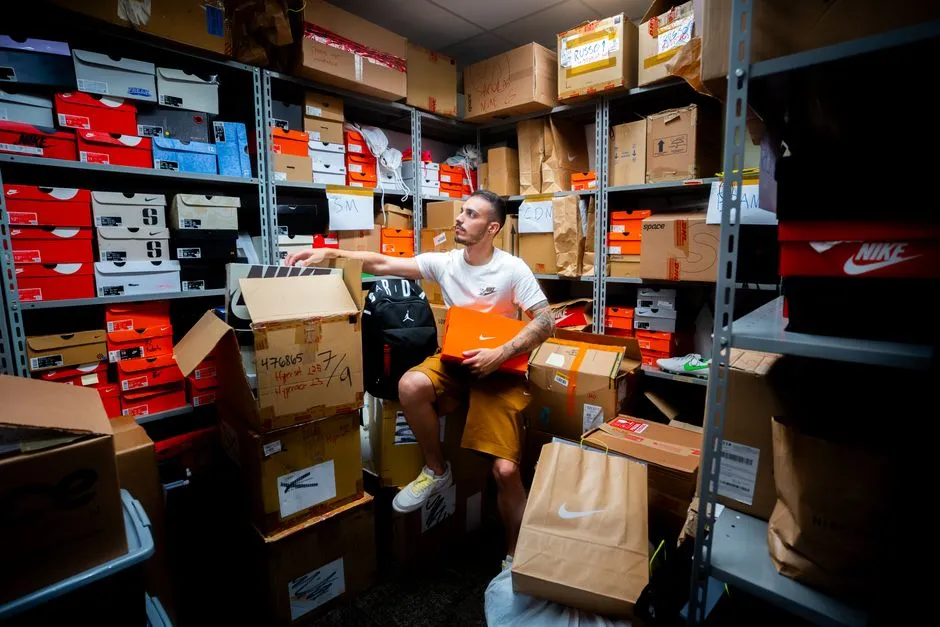
Think about it: retail stores are designed to sell, not to be efficient warehouses and shipping centers. Backrooms might be tiny, and sales floors need to stay clear for shoppers. Trying to fit in packing stations and staging areas without messing up the customer experience is a constant battle.
Solution: A WMS can help by mapping out picking routes that cause the least disruption. You should also set aside specific, out-of-the-way spots for packing and staging. Using compact, multi-functional packing tables and getting smart with backroom shelving can really make the most of limited space.
Balancing Customer Service with Fulfillment Tasks
Store associates are primarily there to help customers in the store. Pulling staff away for fulfillment tasks can mean long lines, neglected shoppers, and a worse in-store experience. You’ve got to balance these conflicting demands for the whole store to perform well.
Solution: A WMS can prioritize tasks, letting staff easily switch between customer service and fulfillment. You could implement dedicated fulfillment shifts or cross-train employees. That way, you ensure coverage without compromising service. Mobile WMS solutions also let associates do tasks discreetly.
Inventory Co-mingling and Accuracy
When store inventory serves both in-store purchases and online orders, keeping track of exact stock counts gets tricky. An item sold on the sales floor could simultaneously be picked for an online order, which leads to major disappointment.
Solution: Real-time, unified inventory management through a WMS isn’t just an option, it’s a must. You could build in inventory buffers for online orders, set aside specific stock just for e-commerce, or use technology for instant stock updates the moment something sells. Regular cycle counts, backed by WMS capabilities, are also essential.
Staff Training and Adoption
Bringing in new technology and workflows means you’ve got to properly train your store associates. They might be used to traditional retail roles, after all. Resistance to change or not enough training can really throw a wrench in successful WMS adoption and hurt efficiency.
Solution: Give comprehensive, hands-on training that clearly shows how the WMS helps with daily tasks. Offer ongoing support and easy-to-find resources. And try to involve staff in the whole implementation process; it can give them a sense of ownership and boost adoption rates.
What’s Next for In-Store Pick-Pack-and-Ship Fulfillment in 2026 and Beyond?
The world of in-store fulfillment is always changing. It’s driven by new tech and what customers expect. Retailers have to keep up to stay competitive.
More Automation and Robotics
Don’t expect full automation for picking on the sales floor anytime soon, but robots and automation will increasingly help out in backroom operations. Think autonomous mobile robots (AMRs) moving picked items to packing stations or doing inventory counts. That frees up human associates for other tasks.
Automated packing machines and smart sorting systems will also become more common, especially for really busy stores or mini-fulfillment centers located inside or next to retail spaces. These technologies promise faster speeds and better accuracy.
AI and Machine Learning for Optimization
Artificial intelligence (AI) and machine learning (ML) will play an even bigger role in perfecting every single part of in-store pick-pack-and-ship fulfillment. AI can look at past data to predict when orders will spike, suggest ideal staffing levels, and even dynamically route pickers. Pretty neat, right?
ML algorithms can also figure out the best spot for inventory within stores, pinpointing fast-moving items and putting them where they’re quickest to grab. Predictive analytics will let you proactively manage potential delays and allocate resources better. We’re talking about a truly intelligent fulfillment system by 2028.

Hyper-personalization and Last-Mile Innovation
Get ready for even more personalized fulfillment choices. Customers will have more control over delivery times, locations, and maybe even packaging. Expect innovative last-mile delivery solutions — drone delivery in some areas, or crowdsourced delivery networks — to be built into WMS systems for seamless execution.
The difference between buying online, picking up in-store (BOPIS), curbside pickup, and ship-from-store will keep getting fuzzier. Systems will be designed to offer maximum flexibility and convenience to the customer. That means WMS platforms need to be super adaptable and integrated across the entire retail ecosystem.
Sustainability in Fulfillment
As environmental concerns grow, sustainable fulfillment practices are becoming non-negotiable. This means optimizing delivery routes to cut down on carbon emissions, using eco-friendly packaging, and minimizing waste throughout the pick-pack-and-ship process. WMS systems will start including modules to track and report on these sustainability metrics.
Retailers will be looking for WMS solutions that not only boost efficiency but also support their corporate social responsibility efforts, contributing to a more sustainable supply chain well into the next decade.
Frequently Asked Questions
What is a Retail Store Floor WMS?
A Retail Store Floor WMS is a specialized software system. It helps manage inventory, picking, packing, and shipping processes right inside a retail store, linking up with e-commerce and POS systems.
How does a WMS improve pick accuracy in a store?
A WMS boosts pick accuracy by giving associates exact location data, smart pick paths, and scan-to-verify steps at every stage. This significantly cuts down on human error.
Can a WMS manage both in-store and online order fulfillment?
Yes, a well-set-up Retail Store Floor WMS is specifically made to handle inventory for both in-store sales and online orders. It prevents stockouts and ensures smooth omnichannel operations.
Is staff training important for WMS implementation?
Absolutely. Thorough and ongoing staff training is crucial for successful WMS implementation. It makes sure associates understand the new workflows and can fully use the system to stay efficient.
What are the main benefits of in-store pick-pack-and-ship fulfillment?
You get faster delivery times, lower shipping costs, better use of inventory, happier customers, and the ability to turn physical stores into active fulfillment centers.
Will automation replace human workers in store fulfillment?
While automation will certainly help and optimize tasks, it’s unlikely to completely replace human workers in store fulfillment. Instead, it’ll free up associates to focus on more valuable customer interactions and solving complex problems.